
Colares — the vineyard the sand saved
A few dozen hectares of sand between the Sintra hills and the Atlantic. Ungrafted vines approaching two hundred years old. It is what remains of one of the first demarcated wine regions in the world.
Colares DOC · Ungrafted · Sand soil · Ramisco and Malvasia de Colares
1908
Colares was demarcated by law in 1908, at a time when almost no country had thought to protect where a wine came from. The regional co-operative opened in 1931, the oldest in Portugal, and for more than fifty years it held the exclusive right to make the region’s wine.
This is not a small region that grew important. It is an important region that grew small.
What Colares used to be
In 1938 Colares had 1,818 hectares under vine: 1,690 on sand, 128 on firm ground. Before the co-operative opened in 1931, the region made around 1,800,000 litres a year.
Today 39.5 hectares remain in consolidated production around the co-operative — 12.2 of them on sand, 27.3 on firm ground. The denomination certifies roughly 20,000 litres in a year, and the figure swings widely with the vintage. Ten producers are left.
The sand, which is what makes Colares Colares, covers a hundred and forty times less ground than it did.
There was a time when this wine justified public works: the Sintra tram reached Colares on 31 March 1904, and Praia das Maçãs that July, partly to carry the wine down from Banzão to the railway.
Phylloxera was not the cause here — the opposite, in fact. What took Colares was the twentieth century: land worth more built on than planted, people who left, and work nobody wanted to inherit because it did not pay. The vines stood through the century’s wars. They barely survived the peace that followed.
How a vineyard is planted in sand
You do not dig a hole. You open a trench and keep clearing the sand until you reach the clay, metres down — sometimes with the grower inside the pit and the sand sliding in around him. The cane roots there, in firm ground. The sand goes back on top a little at a time, over three or four years, as the plant climbs.
That depth is what saved Colares. Phylloxera, which destroyed Europe’s vineyards at the end of the nineteenth century and forced a whole continent to graft, does not live in sand and cannot reach the roots. These vines have never been grafted — the same plants, in the same ground, for close to two hundred years.
The vines grow flat along the ground, because upright the sea wind would break them. Pruning is done kneeling. Between the rows the growers raise palisades of dried cane and loose stone walls, rebuilt every year, against the wind and the salt.
None of this is picturesque. It is the cost of making wine two kilometres from the Atlantic.
Colares can grow again. Replacing the sand takes three or four years, and a serious first harvest is years beyond that.
Featured in “Gordon Ramsay: Uncharted” — National Geographic
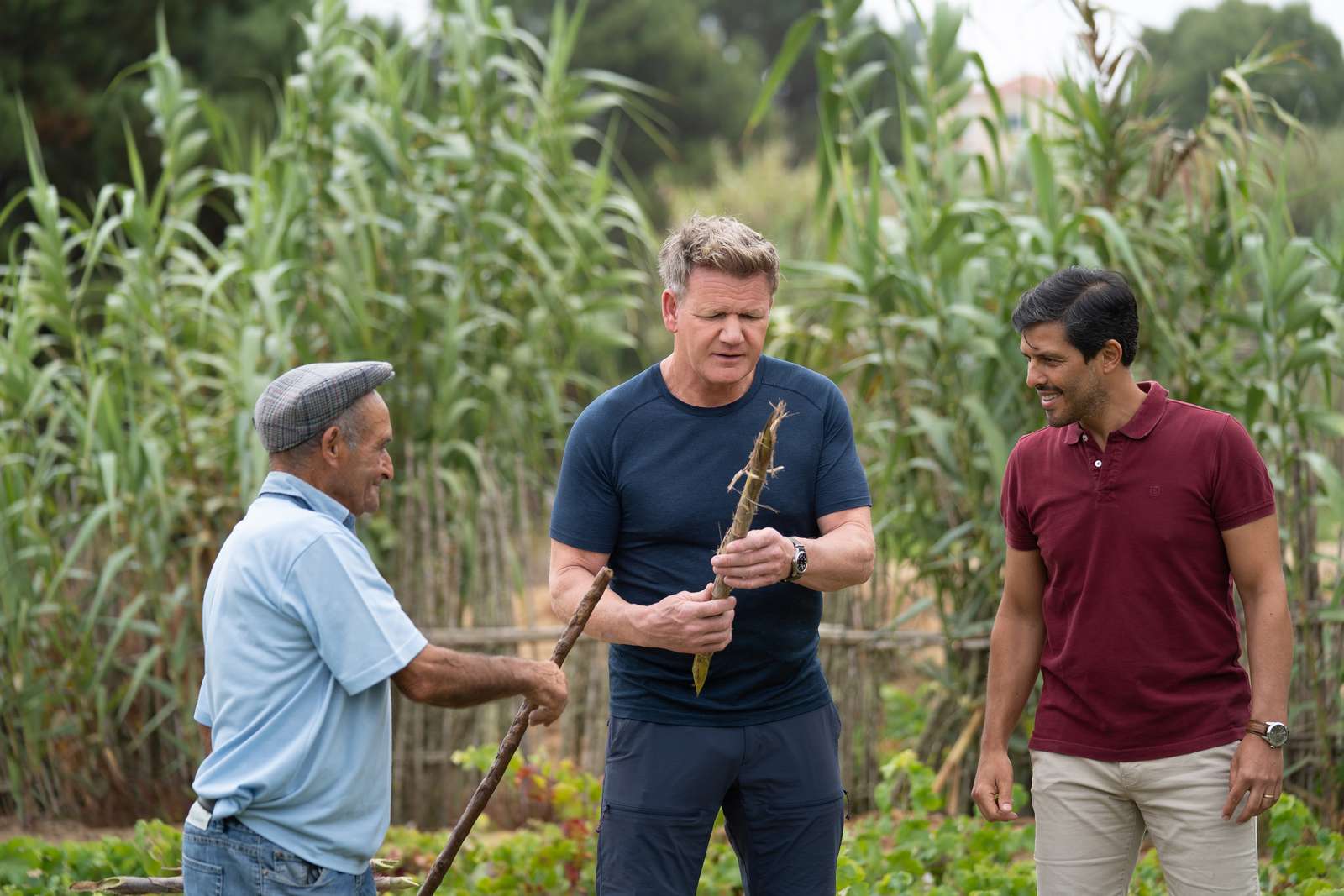
“One of Portugal’s best kept secrets.”
In 2020 Gordon Ramsay came to Colares to film the Portuguese episode of “Gordon Ramsay: Uncharted” (National Geographic, season 3, episode 2). Hélder Cunha walked him through the ungrafted vines — the same rows described on this page — and poured him Ramisco and Malvasia de Colares. In the episode’s narration Ramsay introduced him as the man responsible for one of the most exclusive wines on the planet, and admitted the crew had never seen vines growing in sand. It first aired in Portugal on 15 October 2021.
The two grapes
Ramisco. Small bunches, thick skins, late ripening, and tannins that take years to open. It is a grape that punishes haste: young it is austere, and only time brings out the ripe sour cherry, the spice and the acidity that holds it up for decades.
Malvasia de Colares. A saline white — wax and dried nuts, with body and a long finish.
A note on the name, because the confusion is constant: Malvasia de Colares is a variety of its own, not a strain of the many Malvasias grown across Europe. We always write it in full, for the same reason we write Códega do Larinho with its surname.
Ours are 100% Ramisco and 100% Malvasia de Colares. The appellation permits blending; neither of these bottles is blended.
What the law requires, and what we do
Colares DOC requires eighteen months in wood and six in bottle for the red; six and three for the white.
These two spend thirty-six months in used French oak — used deliberately, for time and oxygen without the taste of new wood. After that the bottle waits. Colares is released late because releasing it early would waste the vineyard.
The bottles
One vintage at a time. When this one is gone, the next follows.
On sale now: Ramisco de Colares 2014 and Malvasia de Colares 2018. Both thirty-six months in used French oak, numbered bottles, cases of three.
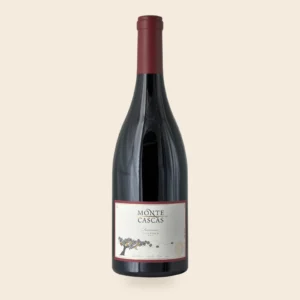
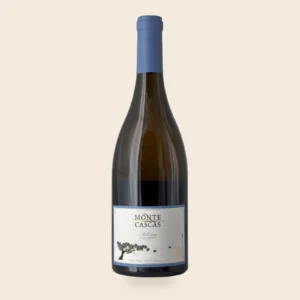
A rare wine you are meant to open. This is living heritage, not a museum piece: it was made to be drunk, and that is the respect it is owed.
Walking the vineyard
The rows are walked on foot, with sand around your ankles. The visit starts in Sintra, at Casa do Preto, goes on to the vineyards, passes Praia da Aguda and Cabo da Roca, and ends with a seated tasting on the Atlantic front, talked through, with a cheese and charcuterie board included. Three to four hours, €150 per person, all year round.
The collection
Colares sits at the top of Hélder Cunha Fine Wines, alongside the other parcels recovered one by one.
