Cascale — the least you can do to a wine
Three wines made between 650 and 690 metres in Beira Interior, with every decision taken in the vineyard and almost none in the cellar.
Beira Interior DOC · Organic · Spontaneous fermentation · Minimal intervention
Under twenty-seven milligrams
All three wines in this brand. Three vintages, three different methods, three reports from the CVR do Dão laboratory issued across three years. The same result in all three:
| Free sulphites | Total sulphites | |
|---|---|---|
| Cascale T · report 1973/20 | < 13 mg/l | < 27 mg/l |
| Síria Curtimenta · report 5422/22 | < 13 mg/l | < 27 mg/l |
| Petroleiro · report 2597/23 | < 13 mg/l | < 27 mg/l |
The «less than» sign is not a detail. The laboratory defines it itself: a value below the limit of quantification for that test. The wines hold less than that — how much less, nobody knows. Only that it is less.
An ordinary red runs between 80 and 120 mg/l total.
And these are not easy wines to keep that way. The T spent eighteen months in French oak; the Síria Curtimenta had twelve days on skins and ten months in barrel; the Petroleiro sat eight months sealed inside clay. Three different routes, with wood, rackings and oxygen along the way, and the same result at the end.
Once is luck. Three times is method.
These are not our claims. They are laboratory reports from the CVR do Dão laboratory, accredited by IPAC (L0230) to ISO/IEC 17025, with international ilac-MRA recognition. They are available to anyone who asks.
We do not say these wines are sulphite-free, because they are not — and because no wine is. Fermentation produces sulphites on its own. What we do is add nothing during the process and, when needed, the minimum at bottling. The law requires «contains sulphites» above 10 mg/l, and we are above it. We would rather give you the number than an adjective.
Eight years on
The usual objection to a wine with little sulphur is that it will not last.
Cascale T is the 2018 vintage. It is on sale today, in 2026, and it is still evolving — no fault, no oxidation, no sign of tiring. The fruit has given way to something else, which is what you want from a wine that is doing its work.
We have no theory about this. We have bottles opened across eight years and a wine still standing.
How much longer? We do not promise numbers. What these wines have going for them is in the lab report: high total acidity, low pH, high dry extract, and sugar below the limit of quantification — there is nothing in the bottle to feed anything.
What we offer you is what we have observed, not what we hope to observe.
What we don’t do
We don’t inoculate yeast. Fermentation starts with the yeasts that came in from the vineyard on the grape skin. If it goes wrong, the lot is lost — which is why almost nobody does it at scale.
We don’t correct. Not acidity, not colour, not tannin.
We don’t fine with animal-derived agents.
What we do
Skin contact. Twelve days on the skins — in the white, exactly as you would with a red. That is where the amber colour of the Síria Curtimenta comes from, and the tannic structure a white does not normally have.
Clay amphora. The Petroleiro is crushed into the talha and ferments inside it, then stays sealed for around eight months. It is the oldest method still alive in Portugal and survives almost only in the Alentejo — doing it in Beira Interior is not local tradition, it is a decision.
Altitude. The vineyards sit at 650 and 690 metres. Without the cold Beira nights, none of this would hold together.
Terrantez da Beira
It goes into the Petroleiro, alongside Tinta Roriz, Touriga Nacional, Rufete, Síria and Fonte Cal — white and red grapes crushed together, as a palhete demands.
It is one of the rarest grapes we work with. It sits in a wine of minimal production because that is the only place it makes sense.
Organic, certified
Organic farming certified by Kiwa Sativa, control body PT-BIO-03, under Regulation (EU) 2018/848. Operator: Casca Wines S.A., AB0778UT.
About the word «natural»
These wines usually get called natural. We are not going to argue about the term, but it is worth saying what it is: «natural wine» has no legal definition and no certification in Portugal or the European Union. Any producer can use the word and answer to nobody.
So we would rather describe the method and give you the numbers. The conclusion is yours.
The wines
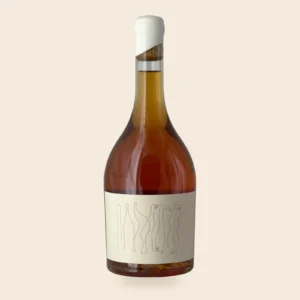
Síria Curtimenta 2021 — 100% Síria. Amber. Dried fruit, cinnamon, fig jam and fennel; velvety tannin, great volume, fresh finish. Spontaneous fermentation, 12 days on skins, 10 months in 225-litre barrel. Hand-harvested. 11.5%. Serve at 12–14°C. Will keep to 2033.
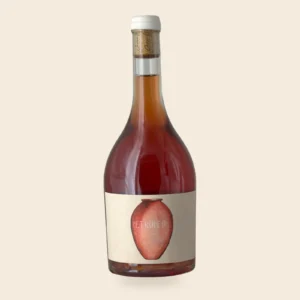
Petroleiro — Palhete in Clay 2022 — Tinta Roriz, Touriga Nacional, Rufete, Síria, Terrantez da Beira and Fonte Cal. Petrol-coloured. Cherry, resin and clay; fine-boned tannin, fresh, persistent finish. Crushed and fermented in clay amphora, eight months sealed. 11.6%. Serve at 12°C. Will keep to 2033.
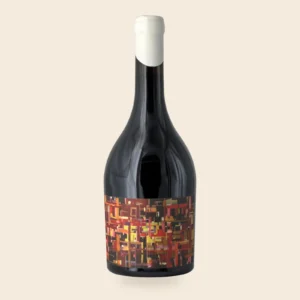
T Tinto 2018 — 38% Touriga Nacional, 36% Tinta Roriz, 26% Touriga Franca. Black fruit and plum; full-bodied, persistent. Spontaneous fermentation, 12 days on skins, 18 months in French oak. 13%. Serve at 16°C. Will keep to 2035. Around 200 bottles remain, and there is no next vintage. When they go, the wine leaves the catalogue.