
Natural Wine
Natural wine. Does it exist? In truth, no. At least if we think of natural as something that exists in nature and was not created by man. In that sense, there are no natural wines, because they all exist through the intervention of man. However, this term is allowed in cases where man’s intervention — the winemaker’s — is minimal. That is what we call natural wine.
The matter is not settled. The more fundamentalist do not accept this term. And for that reason, as an alternative, these wines have also been called ‘minimal-intervention wines’, which is in fact more correct. For us here, it makes no difference. What matters is to understand that this wine is truly the winemaker’s greatest challenge, since there is no safety net to catch us if something goes wrong in producing it.
And it is only fair to state the other side, because the matter does not end with terminology. Without that net, quality can vary considerably from bottle to bottle, and there are natural wines that age less well. Added to this is the absence of a legal definition and of certification — there is no official “natural wine” seal —, which creates some confusion in the market. None of this condemns the category; it merely obliges us to choose carefully who makes it.
What Is Natural Wine?
Natural wine is the wine in which the only ingredient is the grapes; nothing else goes into its composition. It is the wine in which the winemaker has done no more than accompany the transformation of the grapes into wine, so as to obtain the purest wine possible. It is the ultimate expression of terroir, since there is no outside intervention. Only the winemaker’s wisdom counts. And that makes this naturally fermented wine a unique wine.
How Is Natural Wine Made?
Natural wine begins in the vineyard; it begins with the grower who, in the vineyard, is also minimalist in his intervention. Whether natural Vinho Verde, natural red wine, natural white wine or even a natural sweet wine, it has to begin in the vineyard and in respect for its biodiversity. In other words, a natural wine normally originates from organic and/or biodynamic viticulture.
Respect for biodiversity in the vineyard is essential in the production of natural wine, since that is where the wine will be born — from the indigenous yeasts and all the other micro-organisms that also inhabit the vineyard.
In the cellar it is produced in the same way as conventional wines, the difference being the minimal intervention, on the premise that nothing enters beyond the grapes — not even sulphur dioxide, also known as sulphites. This means that even when the wine is made and ready to bottle there is no intervention from man; that is, there is no fining and no filtration, only its bottling.
And so a wine is born that will behave like a living organism inside the bottle and over its years of ageing, until the time comes to open the bottle and enjoy it.
From the page to the glass
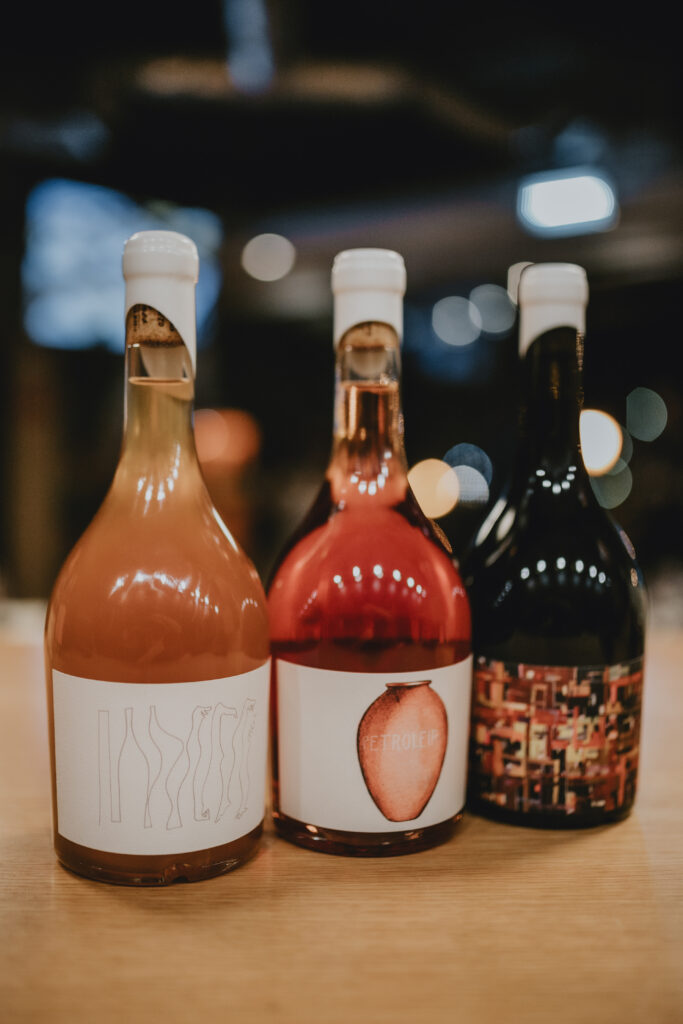
Natural wine has no legal definition. These three are the ones that sit closest to what the article describes.
- Cascale T Tinto — Spontaneously fermented at 690 metres, 18 months in French oak. Organic.
- Cascale Petroleiro Palhete em Talha — White and red varieties together in clay talha, sealed for eight months.
- Cascale Branco de Curtimenta — Síria made like a red: twelve days on skins, ten months in barrel.
