
Winter in the Vineyard: When Nothing Happens — and Everything Is Being Decided
1. Introduction — The Silence That Unsettles
There is a persistent idea that winter is a dead time in the vineyard. The leaves have fallen, the trunks seem inert, the landscape enters a register of pause that many mistake for an absence of life. To an outside observer, nothing is happening.
But it is precisely here that the mistake begins. Winter is perhaps the most misunderstood period in viticulture — and, paradoxically, one of the most decisive. There is no harvest, no fermentations, no aromas filling the cellar. There is no spectacle. And that unsettles a culture used to associating value with visible action. In the vineyard, however, value is rarely where the most noise is made. It is in winter that the plant rests, reorganises its reserves, reacts to the previous year and prepares for the next cycle. Everything that will come afterwards — vigour, balance, ripening, freshness — begins here, when apparently nothing is happening.
This text is born from that realisation: winter is not an unproductive interval; it is a time of silent decision. And perhaps that is why it has so much to teach — not only about viticulture, but also about the way we think of time, work and patience.
2. The Technical Basis — What Really Happens to the Vine in Winter
From a physiological point of view, the vine enters winter in a state of dormancy. Visible vegetative activity ceases, but the plant is far from switched off. Its metabolism slows, reorganises, protects itself.
The reserves accumulated during the previous cycle — above all starch and other reserve compounds — are stored in the roots and the permanent wood. These reserves are essential to ensure the start of the next cycle, even before the plant returns to photosynthesis.
Cold plays a crucial role here. A sufficiently cold winter helps to regulate the vegetative cycle, to make budburst more uniform and to reduce disease pressure. It is no coincidence that regions with well-defined winters tend to produce wines of greater precision and consistency over the years.
Moreover, winter is the moment when the soil “breathes”. Rain seeps in, microorganisms reorganise, the soil structure recovers from the stress of summer. Living soil in winter is a silent ally in the future quality of the grape.
None of this is visible to the naked eye. But all of it is decisive.
To ignore winter is like judging a wine by its primary aroma alone: the depth is lost.
3. In Practice — The Decisions Made When It Seems Nothing Is Being Done
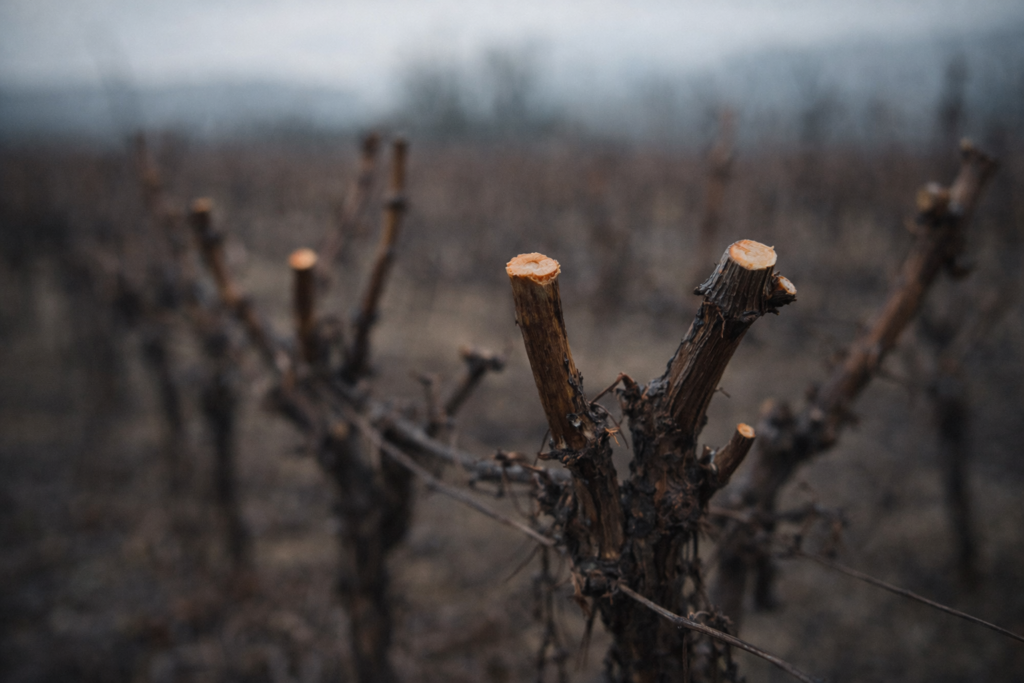
It is also in winter that some of the most structural decisions in viticulture are made. Pruning, for example, is not a mechanical gesture. It is an act of reading the plant. Each cut defines the future architecture of the vine, the balance between vigour and production, the longevity of the stock. Hasty or poorly considered pruning charges its price later. These choices give no immediate return, but they profoundly shape the vine’s behaviour.
There are also decisions that go unnoticed: what is not done. Not intervening in excess, not “cleaning” too much, not correcting everything by force. Winter teaches restraint.
A common mistake, especially in younger projects or those under pressure for quick results, is to try to compensate in winter for what went wrong in summer. But the vine does not respond well to anxiety. It responds to consistency.
Winter is not there to correct everything. It is there to align.
4. The Impact on the Wine — Winter Is Felt in the Glass
It may seem abstract, but winter is clearly felt in the final wine.
Vines that have been through balanced winters tend to give rise to wines with firmer acidity, greater aromatic definition and better ageing capacity. It is not immediate exuberance; it is silent structure.
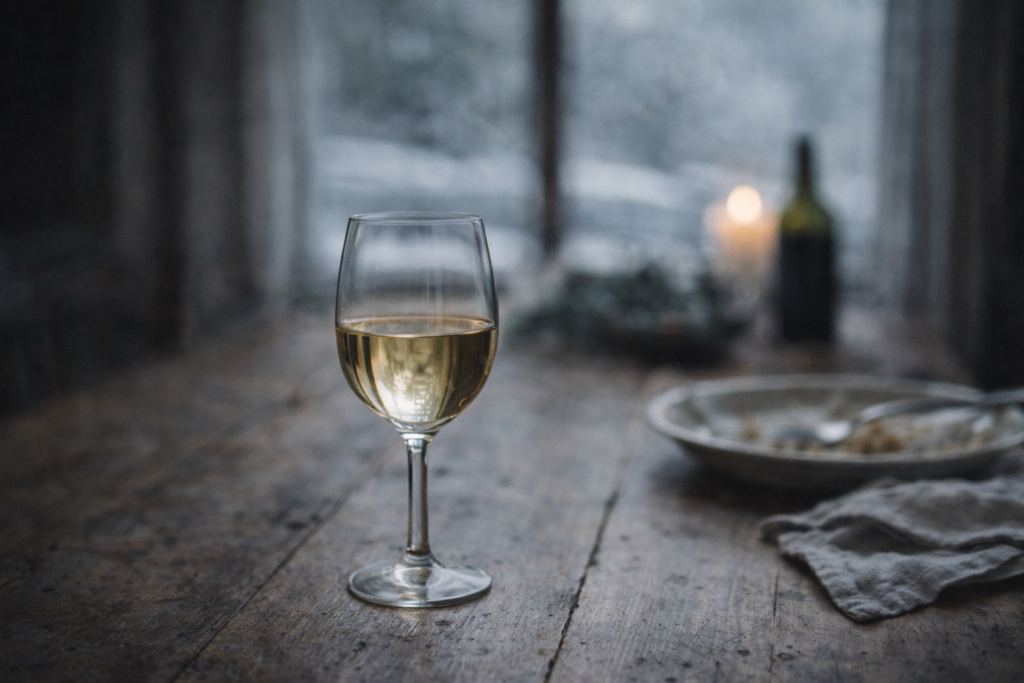
In the glass, this translates into wines that are more precise, less noisy, with long, clean finishes. Wines that need no artifice to assert themselves, because the foundation is well built.
The consumer rarely associates these characteristics with winter. Much is said about the sun, the ripening, the harvest date. But little is said about the rest that allowed all of that to happen in balance.
When a wine shows clarity rather than excess, when it keeps freshness without losing depth, when it ages well without losing identity, there is almost always a well-lived winter behind it.
5. Myths and Oversimplifications — “Winter Doesn’t Matter”
One of the most common myths is that winter is merely a time of waiting. As if the vine were in “pause mode” until the return of spring. This myth leads to two dangerous mistakes. The first is negligence: not observing, not caring, not thinking. The second is unnecessary interventionism: meddling just to feel that something is being done. Modern viticulture, pressured by commercial calendars and simplified narratives, tends to value the visible and the immediate. But it is often the quiet, unseen work that results in great wines. Winter is the natural counterweight to excess.
To respect winter is to accept that not everything needs to happen quickly — neither in the vineyard, nor in the wine, nor in the way we judge it.
6. Portugal as a Living Laboratory of Winter
Portugal offers an extraordinary field in which to observe the impact of winter on the vine.
High-altitude regions, more continental zones or areas with greater Atlantic influence show how different expressions of winter are reflected in the wine. Where the cold is more marked, wines of greater tension emerge. Where winter is mild, the challenge is to preserve freshness and balance.
Portugal’s diversity makes it clear that there is no universal “ideal winter”, but rather winters coherent with their place. The mistake is not in the cold or its absence; it is in disrespecting the vine’s natural rhythm.
That is why I like to think of Portugal as a living laboratory of time. A country where winter, even when discreet, leaves its mark — provided we know how to listen to it.
7. Conclusion — Learning to Trust the Invisible
The winter of the vine teaches us something fundamental: what matters most is not always what is seen.
While everything seems still, the plant is preparing itself. While the field seems quiet, the cycle reorganises. And when spring arrives, it invents nothing — it merely reveals what was decided before.
In wine, as in life, learning to respect these invisible times is a sign of maturity. It is not about doing less, but about doing at the right moment. Perhaps that is why I believe the most interesting wines rarely come from haste. They come from listening, from waiting and from trust in the process.
Further Reading
For anyone wishing to explore this relationship between time, waiting and awareness further, I leave three complementary reads on the Winemaker’s Blog. In How Winter Climate Shapes Grape Quality I explore how the cold, dormancy and silence of winter influence the balance of the vine and the final quality of the wine. In Drink Less, But Better: The Global Trend Revolutionising the World of Wine I reflect on rhythm, awareness and the need to give time back to the act of drinking wine. And in The Magic of Aged Wines: When to Open a Special Bottle? time ceases to be an enemy and comes to be understood as a fundamental ally in building identity and depth.
Wine Suggestions for This Season
In the Glass
Precise wines, with firm acidity and a long finish. Less immediate exuberance, more definition, clarity and the ability to keep pace with time.
At the Table
Cold days call for simple dishes and unhurried meals. Wines that respect the rhythm of conversation and do not overshadow the moment.
Suggestion
At Casca Wines, this profile is well represented in the Cabo da Roca Reserva Arinto IGP Lisboa, a wine designed to favour freshness, firm acidity and clarity of expression. It is a wine that does not impose itself through immediate exuberance. A wine that accompanies the table with discretion and gains dimension as it is drunk slowly.
From the page to the glass
- Monte Cascas Vinha das Lameiras — A 94-year-old Douro vineyard that yields one tonne. Lagar, 24 months in French oak.
- Monte Cascas Vinha da Carpanha — Jaen and Touriga Nacional from a single vineyard at 526 metres in the Dão.
